Luxury homes aren’t built around basic heating needs, they’re designed around comfort, control, and long-term performance.
As expectations rise, traditional HVAC systems start to feel outdated, especially in large, design-driven spaces.
That’s why more high-end homeowners are turning to heat pumps as a smarter way to manage heating without sacrificing precision or comfort.
Why Millionaires Choose a Household Heat Pump
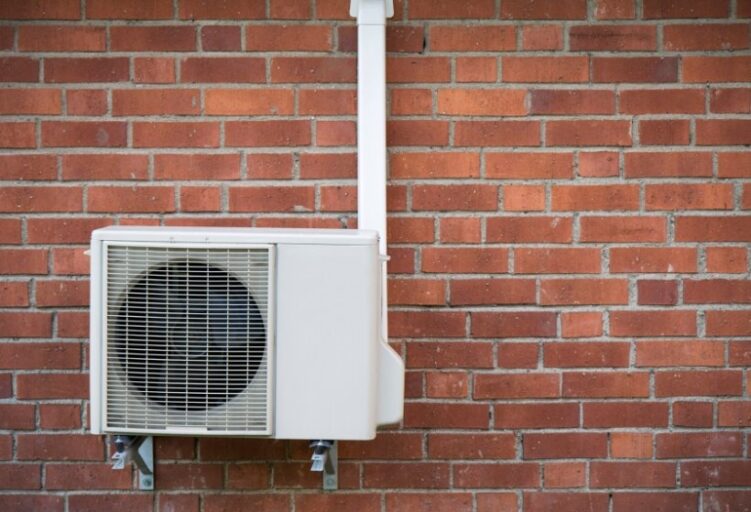
Luxury homes demand precision, not brute force, and that’s where a household heat pump shines.
Instead of blasting hot or cold air on and off like traditional systems, a residential heat pump modulates output continuously, maintaining even temperatures across large, open floor plans and reducing hot or cold spots in rooms with high ceilings or glass walls.
The result is quiet, steady operation that feels almost invisible.
Traditional systems are designed to heat or cool as fast as possible. Heating with heat pump technology is designed to maintain conditions precisely, which matters far more in large homes with varied sun exposure, ceiling heights, and materials.
Because luxury homeowners are no longer impressed by power, they care about control.
High-end homeowners also value design flexibility.
A household heat pump pairs seamlessly with radiant floors, concealed ducting, multi-zone systems, and smart home platforms, without bulky equipment dictating architectural decisions.
The real shift isn’t environmental, it’s experiential. A residential heat pump supports a type of comfort where you stop thinking about the system altogether.
And in a luxury home, anything that draws attention to itself has already failed.
In short, heat pumps align with modern luxury priorities: comfort you feel, technology you don’t see, and efficiency that doesn’t compromise performance.
Why Cooling With Heat Pump Systems Works for Large Homes
In cooling mode, cooling with heat pump systems functions much like a high-performance air conditioner, but with far more control.
A residential heat pump pulls heat out of indoor air and transfers it outside, rather than generating cold air outright.
For large or luxury homes, the real advantage comes from zoning and variable-speed technology, allowing different wings, floors, or rooms to cool independently.
Bedrooms can stay cooler at night without overcooling the entire house, and west-facing rooms with afternoon sun don’t overpower the system.
Instead of cycling on full blast, cooling with heat pump technology adjusts output minute by minute.
The result is stable indoor temperatures, lower humidity, and quieter operation, even in expansive homes with complex layouts. In large homes, cooling isn’t about lowering the thermostat, it’s about managing heat gain.
Cooling with heat pump systems works continuously at low output, preventing the daily temperature creep common in homes with large windows, stone surfaces, and open layouts. Instead of reacting once the house overheats, the system stays ahead of it.
This is why high-end homes feel calm even on extreme heat days. The system isn’t fighting the house, it’s working with it.
Why Heating With Heat Pump Technology Fits Luxury Homes
Modern heat pumps are engineered to perform reliably even in cold climates, and heating with heat pump systems do so more evenly than furnaces.
Rather than producing bursts of hot air followed by cooling periods, heating with heat pump technology delivers consistent, low-intensity heat.
This creates a more natural indoor environment with no temperature swings, no dry air, and no sudden blasts from vents.
Luxury homes expose the weaknesses of traditional heating.
Large volumes of air, tall ceilings, and premium finishes make uneven heat immediately noticeable.
Heating with heat pump systems solve this by matching heat output to actual demand, not a preset on/off cycle.
Rooms don’t spike warm and then cool off, floors stay comfortable, and air doesn’t feel dry or aggressive.
In luxury homes, heat pumps often integrate with radiant floor heating for silent, even warmth, zoned systems for guest suites and unused spaces, and backup or hybrid systems for extreme cold conditions.
The end result is comfort that feels intentional, not reactive, exactly what high-end homeowners expect.
Homeowners often say the house feels warmer at lower thermostat settings, not because it’s hotter, but because the heat is more evenly distributed.
How Much Does It Cost To Install A Heat Pump?
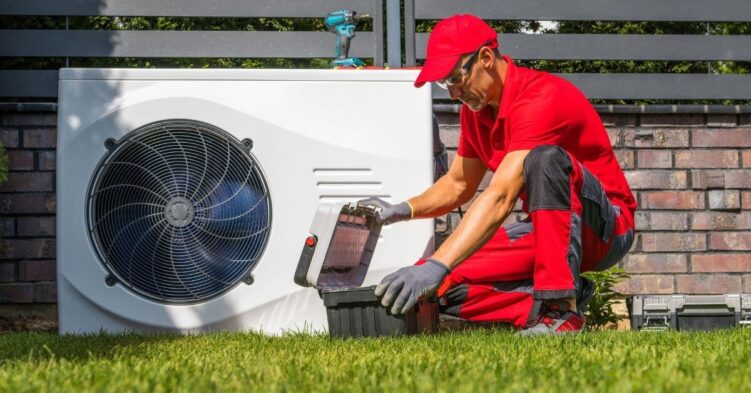
For luxury homes, residential heat pump installation costs typically range from $15,000 to $30,000+, depending on home size and layout, number of zones, ducted versus ductless or hybrid configurations, and any required electrical upgrades.
While the upfront investment can be higher than a standard furnace or AC, luxury homeowners often prioritize long-term performance, lower operating costs, and future-proofing over the lowest initial price.
In luxury homes, cost is less about equipment and more about system design.
When designed correctly, a household heat pump system becomes a core infrastructure upgrade, not just an HVAC replacement.
A properly engineered residential heat pump accounts for architectural layout, insulation and glazing choices, and lifestyle patterns such as occupied versus unused spaces.
That’s why pricing varies widely. A heat pump isn’t a swap, it’s a custom comfort system.
Homeowners aren’t paying for efficiency; they’re paying for performance that fits the home instead of forcing the home to adapt to the system.
What Are The Benefits Of Having A Heat Pump?
Beyond efficiency, heat pumps offer benefits that directly impact daily living, including consistent comfort without temperature swings, whisper-quiet operation even at peak demand, better humidity control that improves indoor air quality, year-round heating and cooling from a single system, and smart home compatibility for granular control.
For luxury homeowners, the biggest benefit is often intangible: the system simply gets out of the way and lets the home perform as designed.
One of the most overlooked advantages tied to heat pump savings is predictability. Heat pumps create indoor environments that behave the same way every day, regardless of outdoor swings.
No surprises. No constantly adjusting thermostats. No rooms that never feel quite right.
For homeowners used to high-end finishes and thoughtful design, this level of consistency feels natural, almost expected.
An Honest Heat Pump Review for Homeowners
In real homes, not lab tests, this heat pump review experience feels fundamentally different from traditional systems.
Many homeowners describe the difference as less mechanical and more natural, similar to how radiant sunlight warms a space versus forced hot air.
Traditional HVAC systems are reactive, while heat pumps are anticipatory.
Instead of waiting for temperatures to drift out of range, a heat pump review often highlights how these systems continuously fine-tune output.
That difference doesn’t show up on spec sheets, but it’s immediately noticeable when you live with the system.
Rather than on-and-off cycling, noticeable temperature swings, louder operation, and separate heating and cooling systems, this heat pump review shows how modern systems deliver continuous modulation, stable and even comfort, quiet background performance, and one integrated solution.
Most homeowners don’t describe heat pumps as more efficient, they describe them as less noticeable.
How Heat Pump Savings Add Up Over Time
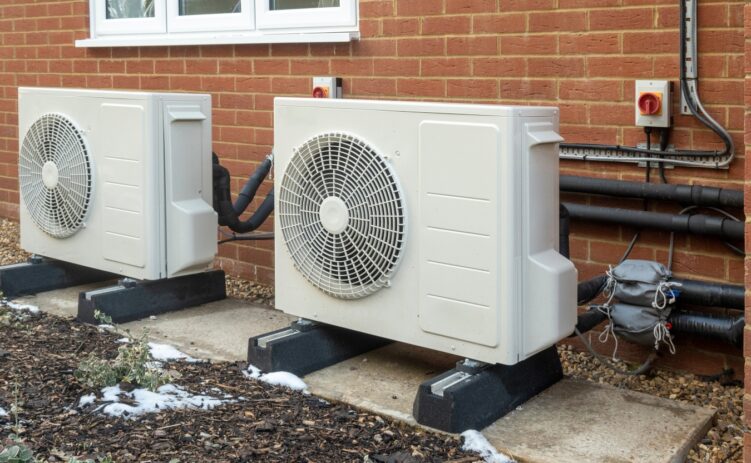
Savings depend on climate, energy rates, and system design, but many homeowners see heat pump savings through lower heating costs compared to oil, propane, or electric resistance, reduced cooling costs thanks to high efficiency and zoning, and lower maintenance expenses due to fewer mechanical components.
Over 10-15 years, heat pump savings often offset the higher upfront cost, especially as energy prices rise and efficiency standards tighten.
For luxury homeowners, heat pump savings show up less on monthly bills and more in long-term stability.
Fewer maintenance issues and less stress on components due to continuous operation reduce exposure to fuel price volatility.
The value isn’t just reduced cost, it’s reduced uncertainty over the life of the home.
Understanding the Heat Pump Carbon Footprint
The heat pump carbon footprint is significantly lower than combustion-based systems because heat pumps move heat instead of burning fuel.
This can cut household emissions substantially, especially when replacing oil or gas systems.
As electrical grids continue shifting toward renewable energy, the heat pump carbon footprint improves every year without changing the equipment.
For luxury homeowners focused on sustainability without compromise, the heat pump carbon footprint makes these systems one of the few upgrades that deliver immediate environmental benefits, long-term alignment with future regulations, and zero impact on comfort or aesthetics.
It’s one of the rare cases where luxury, performance, and sustainability actually point in the same direction.
Heat pumps quietly future-proof luxury homes.
As building codes tighten and resale buyers expect lower-emission homes, a reduced heat pump carbon footprint becomes part of the home’s invisible infrastructure advantage, like upgraded wiring or high-performance insulation.
Homeowners aren’t making a statement, they’re making sure the home remains relevant, compliant, and desirable for decades.