You know that moment when you buy herbs, use two leaves, and then watch the rest slowly give up in the fridge?
Now imagine stepping outside instead, snipping what you need, and feeling oddly accomplished about it. That’s the quiet charm of edible landscaping. It’s practical, a bit stylish, and surprisingly satisfying.
In this guide, we’ll walk through how to design a garden you can actually eat from, without turning your outdoor space into a chaotic allotment.
Get to Know Your Garden
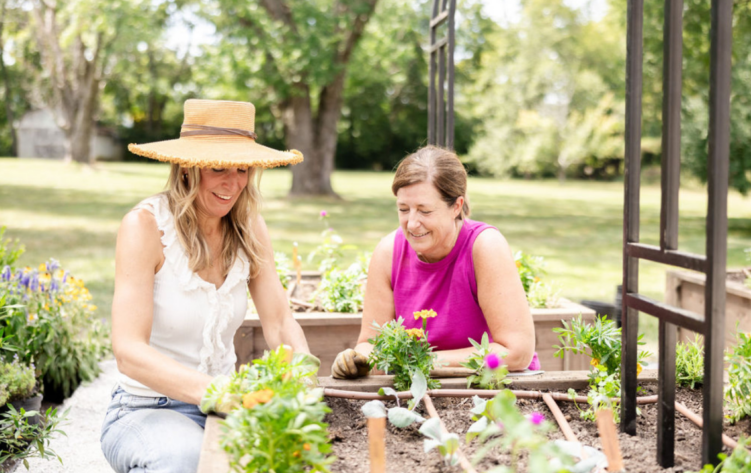
Before you choose anything to plant, you need to understand three things: how much sun your garden gets, what your soil is like, and how well it drains. Get a handle on these, and you’ll avoid a lot of trial and error.
Sun, Shade, and Everything in Between
Sun exposure is the single biggest factor in what you can grow successfully. Fruiting plants like tomatoes, courgettes, and strawberries demand at least six hours of direct sunlight daily. Leafy greens and herbs are far more forgiving of partial shade.
Digging Into the Dirt
Soil might not be the most exciting part of gardening, but it affects everything. If it’s too heavy, too sandy, or lacking nutrients, plants will struggle no matter how much effort you put in.
A simple soil test can tell you what you’re working with and what needs improving. Once your soil is in good shape, everything else becomes easier.
Drainage Matters More Than You Think
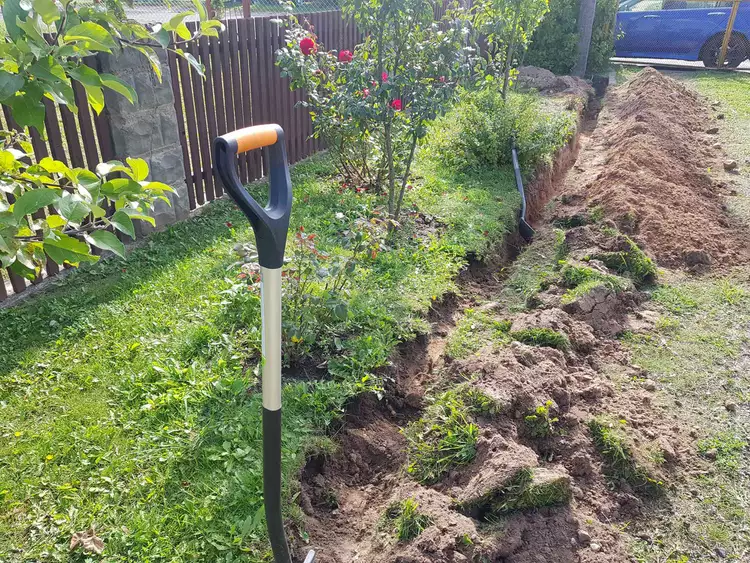
Drainage is often overlooked until plants start failing. If water sits in the soil, roots begin to rot, and growth slows down. If your garden tends to hold water, raised beds are an easy fix. They improve drainage straight away and give you better control over growing conditions.
Stick to an Attractive Layout
Without structure, even good planting can feel a bit all over the place.
Hard landscaping elements like raised beds, paths, arches, and pergolas create the bones of your garden. They should be placed before a single plant goes in the ground. Get the structure wrong, and no amount of gorgeous planting will rescue it.
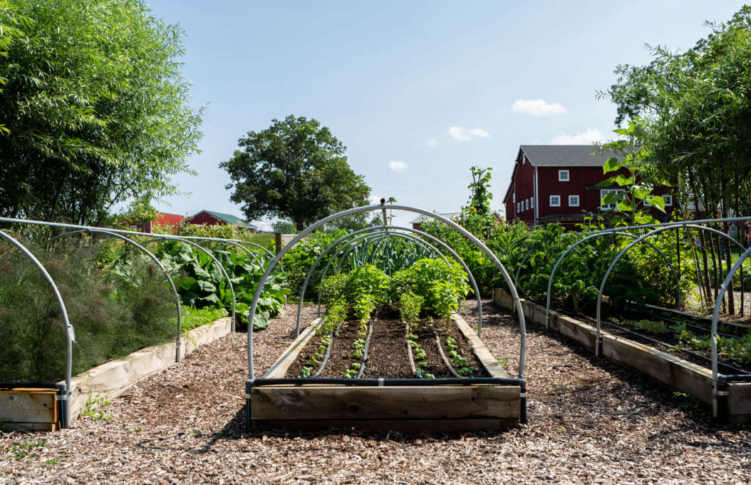
Raised beds are particularly popular in UK edible gardens. They warm up faster in spring, drain better in wet weather, and give your design clean, defined edges.
Cedar and oak are both durable, attractive choices for the frames. And don’t forget your garden paths either. Bark chip, gravel, or reclaimed brick will all look brilliant and keep you off the soil while you harvest.
Don’t overlook your vertical space. A simple metal arch planted with climbing courgettes or squash creates a living feature that holds up beautifully through summer.
Know What’s Worth Growing
The magic of edible landscaping lies in choosing plants that are both beautiful and useful.
This is where most people get it brilliantly right or spectacularly wrong. The trick is selecting edible plants with strong ornamental qualities, so your garden looks designed, not like a mix of plants that ended up there by accident.
Some excellent options for UK gardens include:
- Known for their stunning autumn colour, they also produce a generous harvest.
- Rainbow chard. Its vivid stems in red, yellow, and orange add a slightly tropical feel to any bed.
- Climbing beans. They’re perfect for adding height when trained over arches or obelisks.
- Kale (Cavolo Nero). It produces dark, textured leaves that last well into the colder months.
- These produce cheerful, edible flowers that spread easily and fill gaps with colour.
- Rosemary and lavender. Both are fragrant, evergreen, and useful in the kitchen, while also adding structure to the space.
Think in terms of height, texture, and season. Layer tall plants at the back, mid-height in the middle, and low-growers at the front, exactly as you would with ornamental planting.
Weave Edibles Into Your Garden Elements
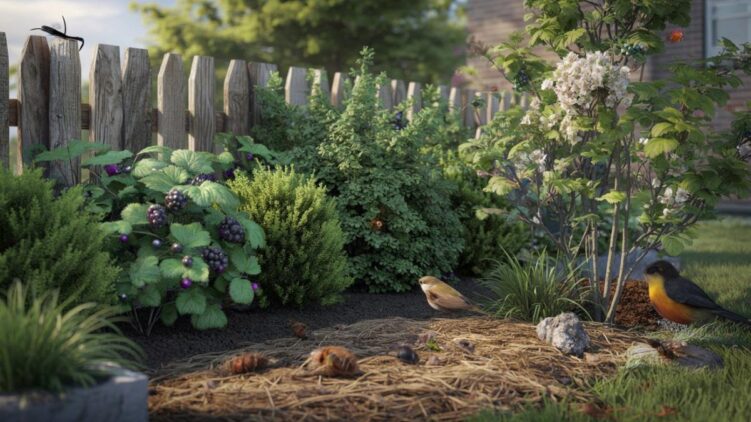
With the layout in place and your plant choices clear, you can finally start filling the space.
Raised beds are the obvious starting point. Pack them with productive combinations: tall climbing beans at the back, chard or kale in the middle, and low-growing herbs or strawberries at the front. Every layer earns its space visually and practically.
Paths and borders are worth planting, too. Thyme and sage spread beautifully along edges, soften hard lines, and smell incredible underfoot.
For vertical surfaces, you can train fruit trees such as espaliers or cordons against the walls and fences you’ve already worked with, turning bare vertical areas into productive, architectural features.
Don’t overlook your arches and pergolas, either. Climbing courgettes, squash, or even a grape vine will scramble up any vertical structure and quickly cover it with growth.
Think of it this way: your hard landscaping is the framework, and your edible plants are the finish.
Plan for Year-Round Gardening
One of the biggest mistakes in edible landscaping is planting for summer and forgetting the other nine months exist.
A well-designed garden can keep producing for most of the year, but only if you plan for it from the start. Spring kicks things off with asparagus, radishes, and early salad leaves.
Summer is when the garden hits its stride, with courgettes, tomatoes, climbing beans, and more herbs than you know what to do with.
By autumn, the focus shifts to crops like squash, apples, and pears, which carry the harvest into the cooler months while still keeping the garden looking full.
Then there’s winter. Most edible gardens stop producing in winter, but with the right planning, they don’t have to.
Overwintering brassicas like kale and purple sprouting broccoli provide both structure and something worth picking. Additionally, evergreen herbs like rosemary and sage look good and taste great no matter what the weather is outside.
The result is a garden that keeps producing throughout the year. That’s what makes edible landscaping genuinely satisfying rather than a seasonal novelty.
Know When to Call in the Professionals

Some elements of an edible garden are genuinely best left to the experts.
Installing raised beds, creating drainage systems, levelling ground, or building structures all benefit from professional input.
If you’re planning a significant transformation rather than incremental changes, working with landscaping services in London and across the wider UK ensures the practical groundwork is done properly before you invest in plants.
A good landscaper will also help with soil improvement at scale, something that’s hard to do effectively without the right equipment and materials.
Conclusion
Congratulations! You’ve just discovered the untapped potential your garden has to offer.
Once you start viewing your flower beds as a genuine pantry, the possibilities multiply. Add these edible elements gradually, or dive in with a complete transformation.
Now, get outside and enjoy that space. You’re only a few seeds away from the best meal you’ve ever had.