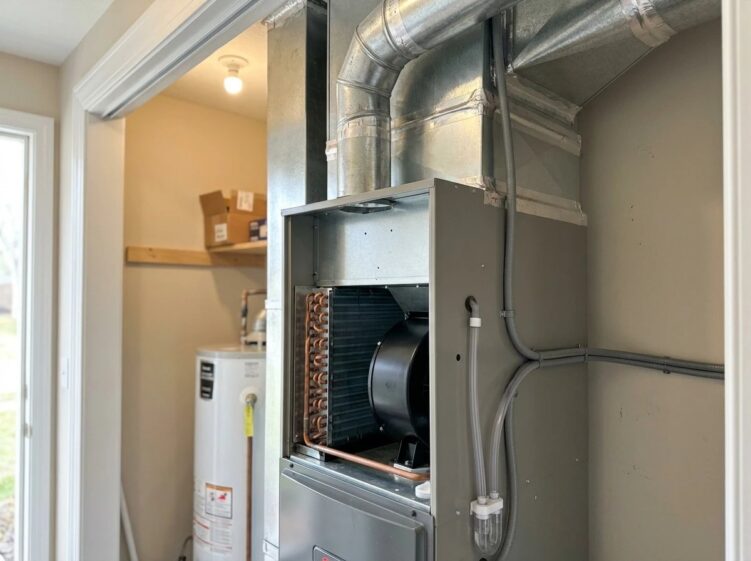
An air handler “sweats” when humid air contacts a surface that is colder than the air’s dew point. Water vapor then becomes liquid on the cabinet, refrigerant lines, supply plenum, or nearby ductwork.
This is the basic process behind air handler sweating, although the underlying reason the surface became cold or exposed to humid air still needs to be identified.
A small amount of moisture can signal damaged insulation around a cold component. Widespread sweating often points to high indoor humidity, air leaking into the equipment, restricted airflow, or an air handler installed in a hot attic, garage, or crawl space. When an air handler is sweating, the location of the moisture provides an important clue.
Moisture across an entire panel often indicates failed internal insulation or a damaged vapor barrier. A wet outline around an access door suggests humid air is entering through a poor gasket or loose panel.
Condensation concentrated on the supply plenum points toward inadequate insulation, duct leakage, or unusually cold supply air.
Water on the large copper refrigerant line usually means its insulation is missing, split, or no longer sealed at the joints. Sweating near wiring and pipe penetrations can reveal small pathways pulling attic or crawl-space air into the cabinet.
The air handler may be cooling correctly while its cabinet, insulation, or installation environment is creating the moisture problem.
Mapping exactly where the first droplets form is one of the fastest ways to narrow the cause of a sweating air handler.
Persistent exterior condensation deserves attention. The water can damage nearby materials while the operating condition behind it increases strain on the HVAC system.
Air Handler Is Sweating: Is It Normal?
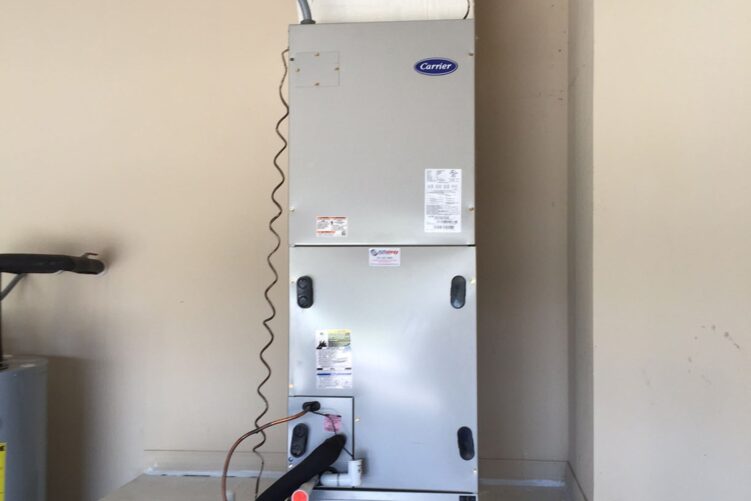
An operating air conditioner can remove several gallons of water from the air on a humid day. That water should form on the evaporator coil, fall into the primary drain pan, and leave through the condensate pipe.
The practical standard is containment: normal condensation stays inside the designated drainage system.
Moisture on the outside of the air-handler cabinet, supply plenum, access panels, or insulated refrigerant lines indicates that a cold surface is exposed to humid air.
Moisture forming or escaping elsewhere suggests a problem with insulation, cabinet sealing, airflow, humidity control, or condensate drainage. In other words, recurring air handler unit sweating should not be treated as a normal part of operation.
Occasional light condensation may appear during extremely humid weather, especially in an unconditioned attic or crawl space. Recurring droplets, wet insulation, puddles, or water stains warrant an inspection.
For example, air at 80°F and 70% relative humidity has a dew point of approximately 69°F. Any exposed cabinet or duct surface below that temperature can sweat.
This explains why an air handler may remain dry most of the year and suddenly develop condensation during a period of hot, humid weather.
Wet panels, soaked insulation, rust, or water beneath the unit indicate that the system does not keep all generated moisture inside its designed collection and drainage path.
What appears to be air handler leaking water may sometimes be heavy exterior condensation rather than a failed drain component, so the source should be confirmed before repairs are made.
Causes Of Excessive Air Handler Unit Sweating
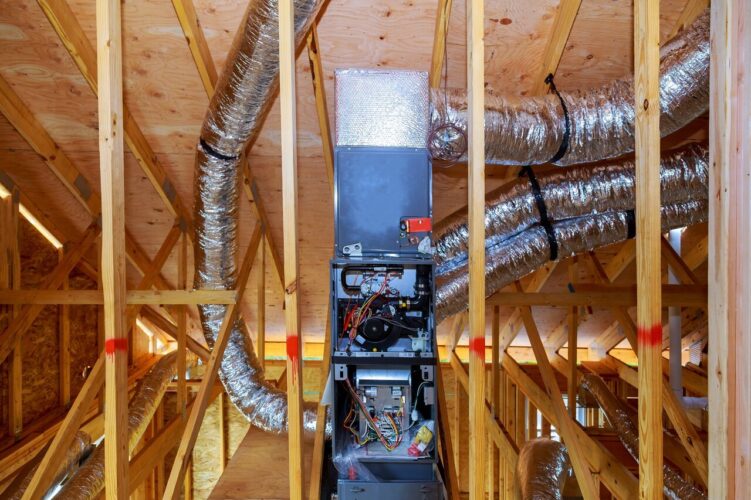
Excessive sweating usually develops when three conditions overlap: humid surrounding air, a cold surface, and an incomplete thermal or vapor barrier. These conditions account for many cases of air handler sweating.
Wet, compressed, detached, or missing insulation allows the metal casing to become cold enough to condense moisture. Fiberglass insulation slows heat transfer, while its outer facing blocks water vapor.
A tear, open seam, or poorly sealed edge allows moisture to reach the cold material underneath. Once insulation absorbs water, it loses thermal performance and keeps the cabinet cold and damp.
Air handlers and return plenums often operate under negative pressure. Small gaps can draw humid attic, garage, or crawl-space air through panel seams and penetrations.
A clogged filter, dirty evaporator coil, blocked return, closed registers, or blower problem can make the coil and cabinet unusually cold.
Certain refrigeration faults can reduce coil temperature and may eventually cause icing.
Exposed suction-line tubing commonly produces localized dripping. Short cooling cycles may cool the home before removing enough moisture, leaving indoor humidity elevated.
Both conditions can contribute to a sweating air handler even when the equipment still appears to be cooling the home.
Attics, garages, and crawl spaces expose the unit to a heavier heat-and-humidity load. A powerful exhaust fan or poorly configured fresh-air system can pull humid outdoor air into the building or equipment area.
A clogged drain, cracked pan, or incorrect drain trap can spread condensate and resemble cabinet sweating. Screws, brackets, and cabinet supports can conduct cold through the insulation and create small, recurring condensation spots.
A lasting repair depends on identifying the combination of temperature, humidity, airflow, insulation, and drainage conditions causing the moisture.
Air Handler Leaking Water Or Sweating?
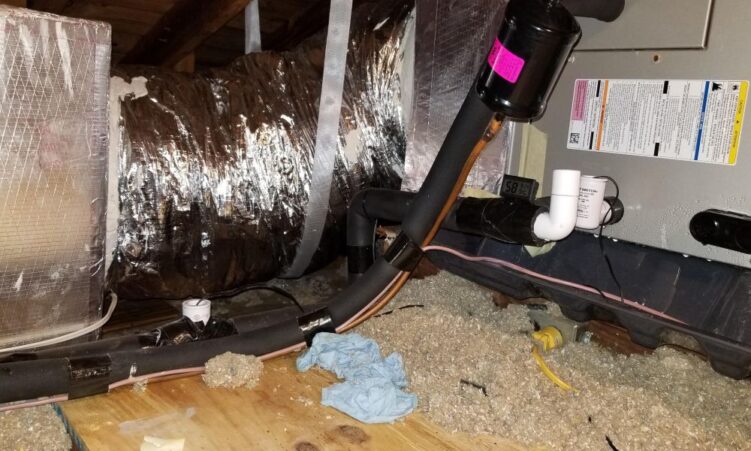
Sweating usually appears as fine droplets or a broad film of moisture across a cold surface. It may affect several panels, the supply plenum, or an exposed refrigerant line.
The moisture often becomes heavier during long cooling cycles or humid weather. The beads multiply across an area, merge, and eventually drip from the lowest edge.
A leak tends to have a defined source. Water may emerge from a cabinet seam, drain connection, cracked pan, clogged condensate line, or nearby plumbing pipe.
It can continue collecting in the same spot and may leave a distinct trail or concentrated puddle. Because the symptoms overlap, air handler leaking water should be distinguished from condensation before deciding what component needs repair.
A simple visual check can narrow the possibilities. Turn off power to the system if water is near wiring or electrical components. Dry the cabinet and surrounding area completely.
Check the filter, drain pan, drain-line connection, refrigerant-line insulation, and cabinet seams. Run the system and observe where moisture first appears.
Water forming evenly on the surface supports a condensation diagnosis. Water traveling from one opening or connection supports a leak or drainage problem.
Timing provides another clue. Water appearing gradually while the compressor runs suggests surface condensation. Water appearing after a long cooling cycle suggests the primary pan or drain may be backing up.
A larger release after the system shuts off may indicate ice melting from the evaporator coil. If water appears when the air handler is off, check nearby plumbing, roof intrusion, or residual water in an overflowing pan.
If the secondary pan contains water while the cabinet looks dry, an internal drainage failure is likely. If the cabinet is wet while both pans remain dry, exterior sweating becomes the leading explanation.
Colored residue, slime, or rust trails can identify water that has traveled through a pan or drain area. Clear droplets distributed evenly over clean metal are more consistent with condensation. Internal components and electrical compartments should be inspected by an HVAC technician.
Why Is My Air Handler Dripping Water?
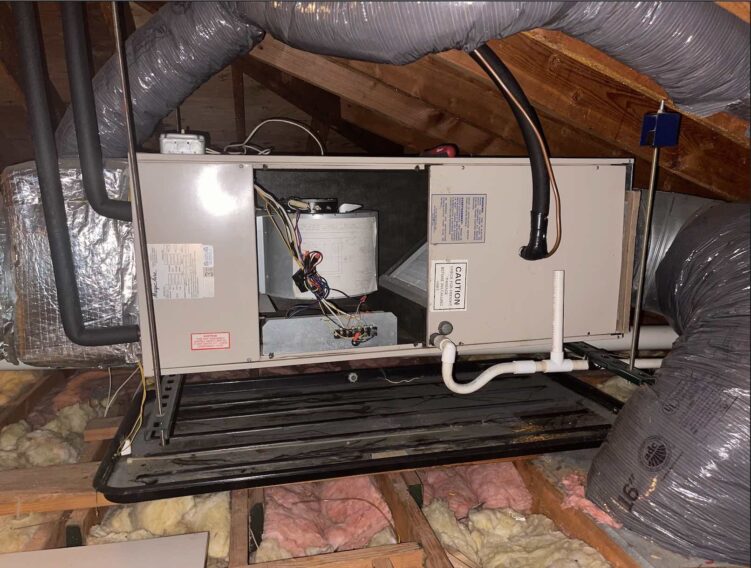
Dripping begins when moisture forms faster than it can evaporate or drain. Exterior condensation may gather into drops and fall from the cabinet, ductwork, or refrigerant tubing.
In some cases, air handler dripping water begins as exterior sweating rather than an internal condensate leak.
The path of the drip often identifies the failure. Water dripping from the cabinet’s lowest exterior edge may have started as condensation higher on the unit.
Water emerging from a panel seam can originate from a cracked pan, loose drain fitting, frozen coil, or saturated internal insulation. Dripping from the refrigerant line usually follows damaged pipe insulation.
Water coming from inside the unit is commonly associated with a clogged condensate line, overflowing drain pan, damaged pan, disconnected drain fitting, frozen evaporator coil, or incorrectly configured condensate trap. These are some of the most common causes of air handler dripping water from inside the cabinet.
A frozen coil can create a particularly large amount of water when the ice melts. Common contributors include a dirty filter, restricted airflow, a dirty coil, blower trouble, or a refrigerant-system fault.
One frequently missed cause is an incorrect condensate trap. Many air handlers place the drain pan on the negative-pressure side of the blower.
Without a properly designed and primed trap, blower suction can interfere with drainage. Water accumulates in the pan and may spill when the blower stops.
Other useful clues include gurgling at the drain, water marks above the normal pan level, repeated float-switch shutdowns, and unusually long periods without water leaving the drain outlet. These symptoms give a technician more diagnostic value than the size of the puddle alone.
Shut the system off if water is approaching electrical equipment, soaking ceilings, or spreading across flooring. Replace a visibly clogged filter if it can be done safely, then arrange service. Repeatedly emptying the pan or wiping down the cabinet leaves the underlying cause in place.
Sweating Air Handler: How Much Damage?
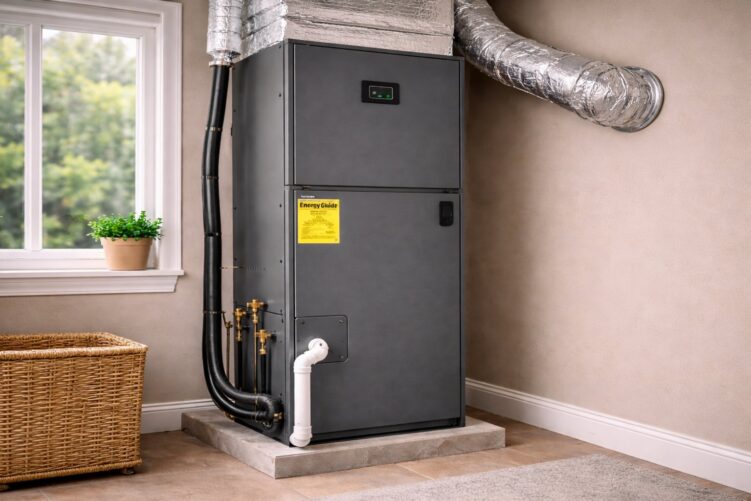
Damage depends on the volume of water, the installation location, and how long the condition continues. Even a slow drip can saturate insulation, soften drywall, stain ceilings, swell wood, loosen flooring, and corrode the air-handler cabinet.
Moisture trapped in insulation or building cavities can also support microbial growth and create persistent odors. Persistent air handler unit sweating can therefore create building damage even when no major internal leak is present.
The visible puddle rarely shows the full moisture path. Water can migrate along duct insulation, electrical conduit, refrigerant lines, framing, and the underside of the cabinet before falling somewhere else.
Attic installations carry additional risk because water may travel along framing or ductwork before appearing on the ceiling below.
By the time a stain becomes visible, insulation and drywall may already be wet. In a closet or garage, the first signs may be rust, peeling paint, warped trim, or a damp floor.
Duration matters greatly. A cup of water released every day can wet materials more extensively than a single visible spill because the area never has time to dry.
Moisture meters are often needed to determine whether nearby drywall, wood, or insulation remains wet after the HVAC problem is corrected.
Water reaching controls, wiring, motors, or other electrical components can cause equipment failure and a safety hazard. Prompt attention generally limits the repair to the HVAC issue and a small drying area. Delayed repairs can expand the work to include insulation, ceilings, flooring, cabinetry, or structural materials.
Musty odors, soft drywall, expanding stains, rust below the cabinet, or repeated water in the emergency pan indicate that the affected area should be evaluated promptly.
The same urgency applies when air handler leaking water continues after the cabinet has been dried and the system restarted.
Air Handler Unit Sweating: Diagnosis And Fixes
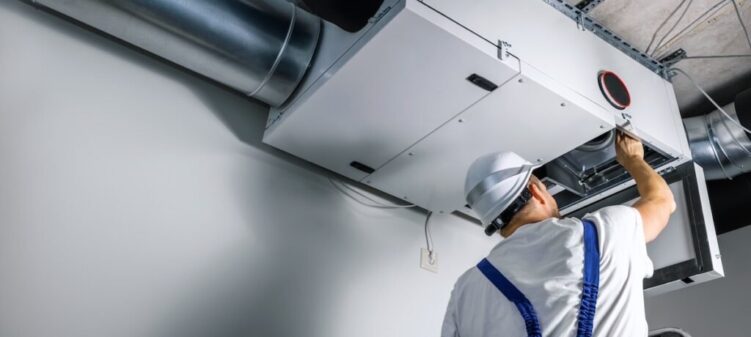
A thorough diagnosis begins with measurements. The technician checks indoor temperature and relative humidity, then compares the air’s dew point with the temperature of the cabinet, refrigerant lines, supply plenum, and duct surfaces.
This establishes where condensation is physically likely to occur. Visual inspection alone may identify damaged insulation while missing the condition that caused it.
This measurement-based approach is especially useful when an air handler is sweating only during specific weather or operating conditions.
The inspection may also include measuring return and supply temperatures, checking static pressure and airflow, and inspecting the filter, blower, evaporator coil, and return-air path.
It may include looking for ice or abnormal refrigerant-line temperatures and testing refrigerant performance when symptoms justify it.
The technician may also inspect cabinet insulation and its vapor barrier, check panel gaskets, duct joints, and penetrations for air leakage, test the drain pan, trap, condensate line, slope, and overflow switch, and evaluate equipment sizing and dehumidification performance.
Repairs are matched to the findings. They may include clearing and correcting the drain system, replacing damaged insulation, sealing air leaks, insulating refrigerant lines, cleaning the coil, restoring airflow, repairing the blower, correcting refrigerant problems, or improving humidity control. Treating the moisture source and the cold-surface exposure together produces the most reliable result.
A useful service report should state the measured dew point, the sweating surface temperature, the airflow or static-pressure findings, and the repair performed.
Those numbers make it possible to verify that the condition has actually changed.
Preventing Air Handler Sweating
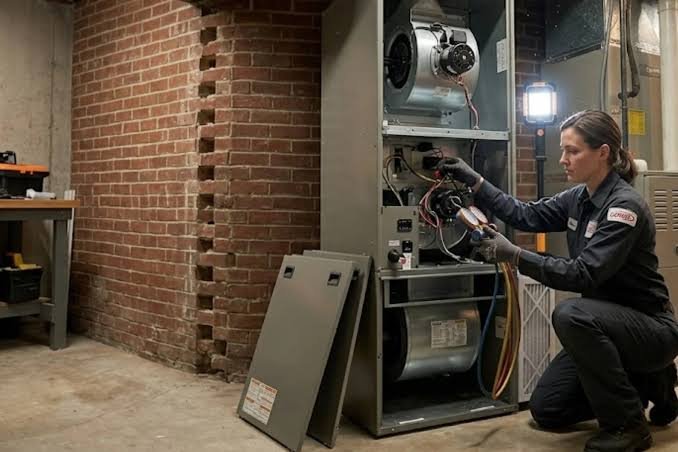
Prevention centers on controlling humidity, preserving airflow, insulating cold surfaces, and keeping condensate drainage reliable. These steps help prevent both air handler sweating and drainage conditions that may initially look similar.
Start by recording the conditions that existed when the sweating occurred. Note the outdoor weather, indoor humidity, thermostat setting, fan mode, length of the cooling cycle, and exact location of the first moisture. This creates a reference point if the problem returns.
Replace or clean the air filter on the schedule recommended for the system and household. Keep return grilles and supply registers unobstructed.
Use Auto fan mode when continuous blower operation raises humidity between cooling cycles.
Maintain correct blower speed and system airflow, and choose filters that provide adequate filtration without exceeding the system’s pressure capability. Keep the evaporator coil and blower wheel clean.
Keep indoor relative humidity within the range recommended for the home and climate. Confirm that replacement equipment is sized for both cooling and moisture removal.
Address attic, crawl-space, or garage humidity and air leakage when they affect the installation area. These measures are particularly important when air handler unit sweating occurs only during the most humid part of the year.
Seal cabinet joints, access doors, return plenums, and penetrations. Maintain an uninterrupted vapor barrier around cold ducts, plenums, pipes, and cabinet surfaces.
Protect air-handler insulation from compression and water absorption. Proper sealing is especially important when an air handler is sweating around panel seams or penetrations.
Clean and test the drain, trap, float switch, and emergency pan before the cooling season. Correct pressure imbalances caused by exhaust fans, duct leakage, or inadequate return-air paths.
These checks can also reduce the risk of air handler dripping water because of a backed-up drain or improperly functioning trap.
Schedule service when the system freezes, runs continuously, short-cycles, produces weak airflow, or leaves rooms clammy. A recurring sweating air handler should also be inspected before water begins affecting nearby building materials.
After repairs, test the system during a long cooling cycle on a humid day. The final check should confirm dry exterior surfaces, unrestricted condensate flow, stable indoor humidity, and no water in the emergency pan. If air handler dripping water or exterior condensation returns, additional airflow, insulation, drainage, or humidity diagnostics may be needed.