Pool ownership involves more than weekly cleaning and adding chemicals. Understanding routine service, utilities, seasonal care, and repair costs helps you build a realistic annual budget. A clear estimate of the swimming pool maintenance cost per year also makes it easier to compare DIY care with professional service.
Homeowners who maintain salt water pool systems themselves may spend less on routine labor, but they still need to budget for water testing, salt-cell cleaning, electricity, replacement parts, and occasional professional repairs. These expenses should be considered alongside the cost of hiring a full-service pool maintenance company.
Average Swimming Pool Maintenance Cost Per Year
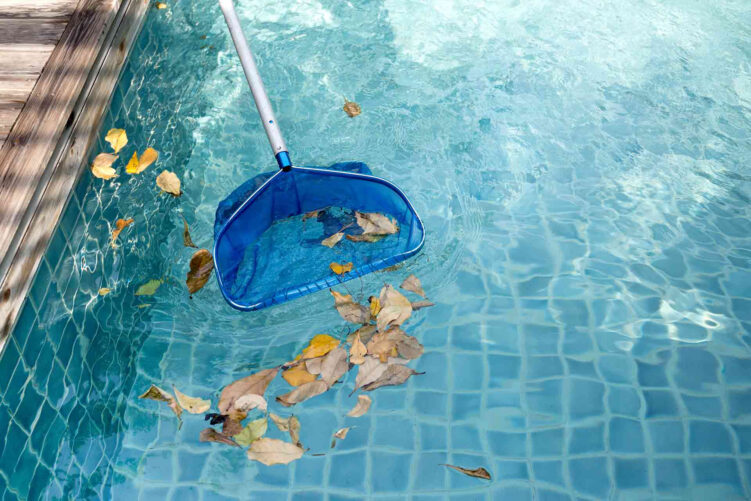
For a typical residential pool in the United States, routine maintenance generally costs $960 to $1,800 per year, with many homeowners spending approximately $1,400 on cleaning, water testing, chemical balancing, and basic equipment checks.
A more complete annual ownership budget is usually $3,000 to $6,000 after adding electricity, replacement water, seasonal opening and closing, minor repairs, and a reserve for worn parts. Heated pools, large pools, aging systems, attached spas, and year-round professional service can push the total higher.
The distinction between routine maintenance and total operating cost matters when estimating the cost of pool maintenance per year. A company advertising a $100 monthly pool service may include labor and chemicals, but the price probably does not cover electricity, water, winterization, leak detection, or equipment replacement.
A useful planning formula is routine service and chemicals plus utilities, seasonal services, and a repair reserve.
For example, a mid-sized inground pool might require approximately $1,400 for routine maintenance, $900 for electricity, $150 for water, $800 for opening and closing, and a $600 repair reserve. That produces a practical annual budget of about $3,850 and illustrates a realistic annual pool maintenance cost.
A pool may have a low-expense year followed by a year involving a failed pump, heater, liner, or salt cell. Using a multi-year average provides a more accurate picture of ownership costs.
What The Cost Of Pool Maintenance Per Year Includes
Annual pool maintenance includes more than cleaning and chlorine. In addition to routine cleaning and maintenance, a complete pool budget may contain chemicals of $175 to $750 per year, electricity of $800 to $1,200, replacement water of $50 to $250, opening and closing of $650 to $1,000, and minor repairs and replacement parts of $400 to $1,000 or more.
Together, these categories provide a broader view of swimming pool annual maintenance cost.
These figures should not always be added together without reviewing the service agreement because the categories can overlap. Some maintenance packages include chemicals, filter cleaning, vacuuming, opening, or closing. Others cover only labor or charge separately for these services.
Chemical expenses include sanitizer, shock or oxidizer, pH increaser and reducer, alkalinity products, calcium hardness treatments, stabilizer, algaecide, salt, and specialty stain or scale treatments. A stable, routinely tested pool generally uses fewer corrective chemicals than a pool that repeatedly develops cloudy water or algae.
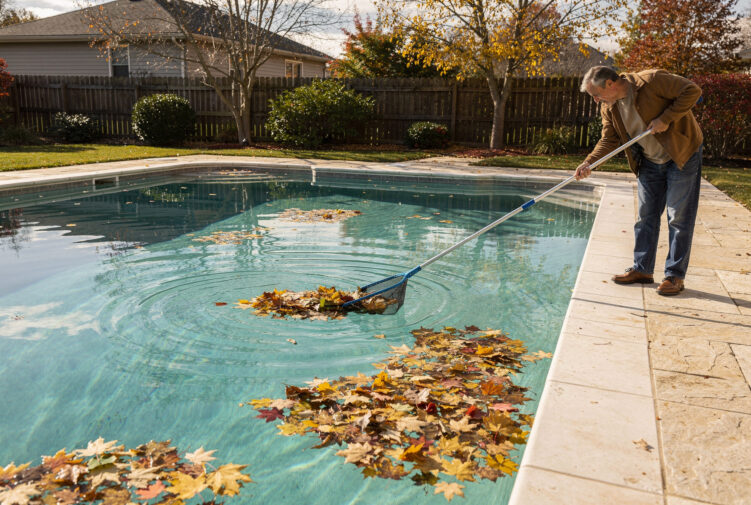
Cleaning includes skimming, brushing, vacuuming, emptying baskets, cleaning the automatic pool cleaner, backwashing or cleaning the filter, and removing leaves or storm debris. Professional plans may provide all of these tasks or divide them among different service tiers.
The circulation pump is usually the largest recurring electrical load. Heaters, salt chlorine generators, booster pumps, lighting, water features, automation systems, and attached spa equipment add further consumption.
HomeGuide estimates pool electricity at approximately $800 to $1,200 per year, although actual costs depend heavily on equipment efficiency, runtime, utility rates, and heating use. Heating can become one of the largest operating expenses, especially when the pool is kept warm overnight or used during cooler months.
Owners pay for water lost through evaporation, splashing, leaks, filter backwashing, partial draining, and seasonal refilling. The annual cost is commonly estimated at $50 to $250, with higher expenses in hot, dry regions or areas with expensive municipal water.
Routine servicing generally covers water testing, chemical adjustments, basket cleaning, basic cleaning, filter inspection, and a visual equipment check.
DIY vs. Professional Annual Pool Maintenance Cost
DIY maintenance commonly requires $30 to $50 per month for chemicals, or approximately $360 to $1,140 per year for basic recurring maintenance supplies and tasks, excluding electricity, water, seasonal services, and major repairs.
For DIY owners, the swimming pool maintenance cost per year depends heavily on chemical use, equipment efficiency, and consistency. Owners may also spend approximately $100 to $300 initially on testing supplies, brushes, a skimmer, vacuuming equipment or a robotic cleaner, chemical storage, and other tools.
They must also account for their time and for occasional professional help with equipment, leaks, electrical components, or severe water problems.
DIY care offers the lowest direct cost and requires consistent testing, cleaning, chemical handling, and recordkeeping. The true savings depend on how consistently the pool is maintained.
Small chemical adjustments are inexpensive, while recovering a green pool, replacing a damaged heater, or correcting scale caused by poor water balance can consume several years of expected savings.
Professional pool service generally costs $80 to $150 per month, or approximately $960 to $1,800 per year, although pricing varies according to visit frequency and the tasks included. These service fees are a major part of the cost of pool maintenance per year. Some providers quote a monthly package; others quote $80 to $150 for each full cleaning visit.
Professional service reduces the owner’s weekly workload and provides routine observation by an experienced technician.
Hybrid maintenance allows the owner to skim, test, and perform simple cleaning while using a professional for seasonal service, filter work, inspections, and repairs. A hybrid arrangement often provides good cost control for owners who can complete basic weekly tasks but prefer professional support for technical work.
Hybrid care commonly costs $900 to $1,800 per year, with the owner handling simple tasks and a technician handling technical and seasonal work. Full professional service commonly costs $1,200 to $3,000 or more per year and requires limited weekly involvement from the owner. The selected approach therefore has a direct effect on annual pool maintenance cost.
Utilities, water, repairs, and equipment replacement remain the owner’s responsibility under all three approaches unless a contract specifically includes them.
Factors Affecting Swimming Pool Annual Maintenance Cost
Pool size
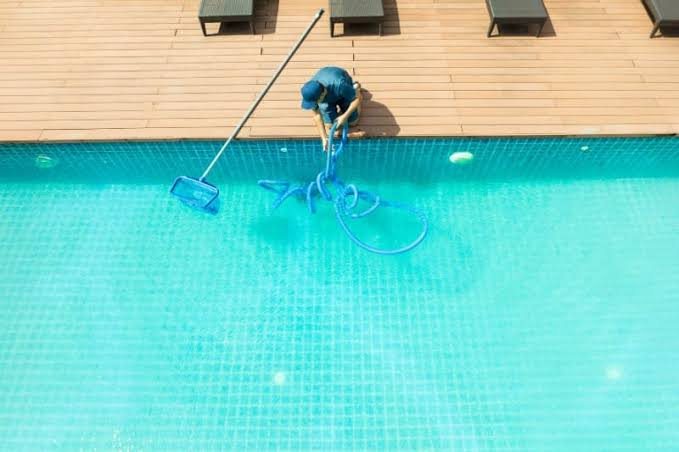
Larger pools require more chemicals, more cleaning time, greater pump capacity, additional water, and higher heating costs. Angi provides routine-maintenance planning ranges of $800 to $1,200 per year for pools up to 10,000 gallons, $1,200 to $1,800 per year for pools from 10,000 to 20,000 gallons, and $1,800 to $3,000 per year for pools over 20,000 gallons. Pool volume is therefore a major driver of swimming pool annual maintenance cost.
Irregular shapes, deep ends, attached spas, tanning ledges, waterfalls, fountains, and in-floor cleaning systems create additional surfaces, water volume, or equipment that must be monitored and maintained.
Pool construction
Above-ground pools are generally less expensive to maintain because they tend to be smaller and use simpler equipment. Difficult access around an above-ground pool can increase professional labor charges.
Inground pools frequently have more plumbing, larger filters, permanent lighting, heaters, automation, multiple pumps, water features, and other components that create additional service and repair exposure.
Surface material
Surface porosity and durability influence brushing, chemical demand, stain control, and long-term replacement costs.
Fiberglass costs approximately $800 to $1,200 per year for routine maintenance. Its smooth, nonporous surface tends to resist algae and requires less aggressive brushing.
Vinyl liner pools cost approximately $1,000 to $1,500 per year. Routine care is moderate, although liners require gentle cleaning and careful chemical placement to prevent bleaching or damage. Liner replacement creates a major periodic expense.
Concrete or gunite pools cost approximately $1,200 to $1,800 per year. Porous surfaces generally require more brushing, chemical management, stain treatment, calcium management, acid washing, and eventual resurfacing. Industry cost data generally places fiberglass at the low end of long-term maintenance, vinyl in the middle, and concrete at the high end.
Location and climate
Location affects labor rates, electricity prices, water prices, chemical availability, and service demand. A professional visit in a high-cost metropolitan area may be considerably more expensive than the same service in a lower-cost region.
Warm regions have longer operating seasons and often require year-round circulation, chemical treatment, filtration, evaporation control, cleaning, and algae prevention. Strong sunlight can increase sanitizer demand, while wind and heat accelerate evaporation.
Cold climates have shorter active seasons, followed by opening, closing, freeze protection, and winter cover care. Winterization becomes especially important where water remaining in pipes, filters, pumps, or heaters could freeze and damage equipment.
Heavy rain, storms, dust, pollen, nearby trees, and frequent pool use can also increase treatment and cleaning needs. Heavy rain can dilute pool chemistry and introduce contaminants. Leaves and organic debris increase cleaning demand and sanitizer consumption.
Seasonal Services And Pool Maintenance Cost
Pool owners in seasonal climates should generally budget $650 to $1,000 per year for professional opening and closing. Opening commonly costs $350 to $500, and closing or winterization commonly costs $200 to $500.
Some providers charge up to approximately $650 when the pool is large or requires additional work. Seasonal work can materially increase the swimming pool maintenance cost per year.
A more cautious budget of $1,000 to $1,300 per season cycle is appropriate for pools with attached spas, solid covers, extensive or complicated plumbing, water features, heavy debris, or water that requires significant cleanup when opened.
Opening may include removing, cleaning, and storing the cover; reinstalling plugs, fittings, ladders, and accessories; restoring the water level; starting the pump, filter, heater, and sanitation system; testing and balancing the water; and initial vacuuming or debris removal.
Closing and winterization may include cleaning and balancing the water, lowering the water level where appropriate, blowing water from plumbing lines, protecting pipes, filters, pumps, and heaters from freezing, adding winter chemicals, removing accessories, and installing the winter cover.
Homeowners should ask whether vacuuming, cover cleaning, winter antifreeze, filter cleaning or disassembly, spa winterization, and return visits are included, as these services may incur separate charges.
Repairs And Equipment Swimming Pool Maintenance Cost
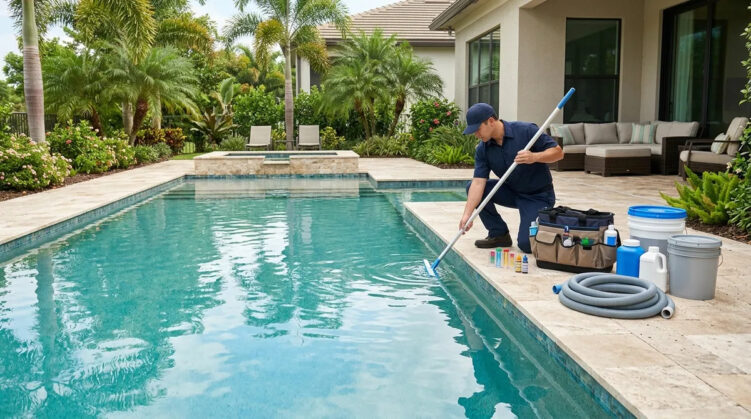
A routine service plan rarely covers major repairs. Unexpected expenses commonly begin with small components such as seals, pressure gauges, valves, O-rings, baskets, sensors, timers, and cleaner parts. Larger repairs can add hundreds or thousands of dollars to the annual total, making repair exposure another key part of the cost of pool maintenance per year.
Algae recovery or corrective cleaning may cost $150 to $500, leak detection $200 to $500, pump repair $250 to $800, and filter repair or replacement $150 to $1,600. Salt-cell replacement may cost $200 to $1,000 or more, while heater repairs can cost several hundred dollars.
Larger failures can have a substantial effect on the annual total. A new pool heater may cost approximately $1,600 to $5,200 installed. Inground vinyl-liner replacement can reach $3,000 to $7,500, depending on the pool’s size, liner specifications, and local labor costs. Concrete or plaster resurfacing can become a major five-figure periodic expense for some pools.
Current national cost data places ordinary minor pool repairs around $150 to $800, while total annual repair spending commonly reaches $400 to $1,000 or more.
Leaks can be especially expensive because they create several costs at once: diagnostic labor, plumbing or structural repair, replacement water, additional chemicals, and reheating.
A reasonable annual repair reserve is $500 to $1,500 for an established pool. Equipment age should influence the reserve. A pool with recently installed equipment may need a reserve of approximately $500 per year. Owners of older pools or systems with aging pumps, heaters, liners, automation, or plumbing may justify a reserve of $1,000 to $2,000 per year.
This money does not need to be spent every year; it prevents a major replacement from becoming an unexpected household expense. The reserve can also account for long-term expenses. A $4,000 component expected to last eight years represents approximately $500 per year of eventual replacement cost, even though the payment occurs in a single year.
Pool Maintenance Cost By Pool Type
Traditional chlorine pools
Traditional chlorine pools generally have straightforward equipment and lower initial equipment costs. Owners add chlorine directly through liquid chlorine, tablets, granules, or an automatic feeder. Their recurring chemical costs can be higher because chlorine must be purchased and added regularly.
Saltwater pools
A saltwater pool still uses chlorine. The salt chlorine generator converts dissolved salt into chlorine automatically. Owners continue to test chlorine, pH, alkalinity, calcium, stabilizer, and salt levels, and the cell must be inspected and cleaned when scale develops.
HomeGuide estimates DIY saltwater maintenance at approximately $45 per month and professional monthly service at $80 to $95. Saltwater systems can reduce routine purchases of chlorine products, though the generator and cell create periodic equipment expenses. Replacement cells commonly cost $200 to $700, with advanced models costing more.
Saltwater can corrode vulnerable metal components when materials, bonding, water balance, or maintenance are unsuitable. This is particularly relevant for above-ground pools with metal walls, fasteners, ladders, or rails.
For long-term planning, saltwater ownership shifts part of the expense from frequent chlorine purchases to generator maintenance and periodic cell replacement.
Above-ground pools
Typical expenses include chemicals, replacement filters, liner care, pump operation, winter covers, and occasional frame or fitting repairs. Liners, pumps, filters, frames, and winter covers still require inspection and periodic replacement.
A modest above-ground pool may cost approximately $800 to $1,500 per year to operate and maintain, depending on size, season length, equipment, and the amount of professional help used. Simple DIY setups may cost less.
Inground pools
A typical inground pool may require $3,000 to $6,000 per year for complete upkeep. This range reflects a complete annual pool maintenance cost rather than routine cleaning alone. Large heated pools, concrete pools, pools with older equipment, attached spas, and premium finishes can exceed this range.
Reducing Swimming Pool Maintenance Cost Per Year Safely
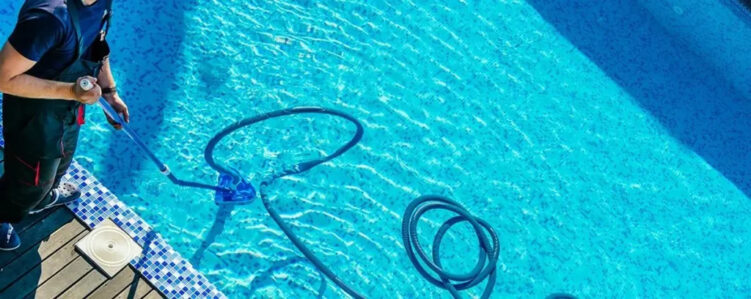
Use a properly fitted pool cover whenever the pool is unoccupied. A cover limits evaporation, debris, heat loss, and unnecessary chemical consumption. The EPA reports that pool covers can prevent up to 95% of evaporation when used consistently and appropriately. Reduced evaporation means less replacement water and less loss of heat and chemicals.
Test the water regularly and make small, measured adjustments. Routine testing reduces unnecessary chemical use and helps prevent corrosion, scale, algae, and cloudy water. The CDC recommends routinely monitoring disinfectant and pH levels because proper levels protect swimmers and pool equipment.
Its residential guidance identifies a pH range of 7.0 to 7.8 and at least 1 ppm chlorine, or at least 2 ppm when cyanuric acid is used, alongside the product manufacturer’s instructions. Use reliable testing results, calculate the correct dose for the pool’s volume, and allow each treatment time to circulate. Repeatedly adding products without identifying the cause of a water problem can create further imbalance.
Use a properly sized pump and adjust its runtime according to actual water conditions. Pumps are frequently operated longer than necessary, while an oversized pump consumes more electricity and can increase maintenance costs. The Department of Energy recommends smaller, higher-efficiency pumps and appropriate operating schedules, increasing runtime gradually only when the water requires it. ENERGY STAR-certified inground pumps use approximately 20% less energy than standard models and may save around $50 per year. Certified above-ground pumps use about 11% less energy and may save around $20 per year. Actual savings depend on runtime and local electricity prices.
Keep baskets, drains, intake grates, and filters clean so the pump does not work harder than necessary. A dirty filter or restricted flow increases resistance and energy use. Backwashing too frequently wastes water, while delayed backwashing increases resistance. Clean or backwash at the proper interval for the filter type, operating pressure, and manufacturer guidance.
Track the water level and investigate losses that exceed normal evaporation. Early detection is usually less expensive than prolonged water loss followed by structural repair.
Remove debris before it decomposes. Leaves, pollen, insects, soil, sunscreen, and other organic matter increase sanitizer demand and can contribute to stains or algae. Frequent light cleaning is generally less expensive than corrective treatment. Regular skimming, basket cleaning, water-level checks, and basic testing can also reduce the amount of labor required during a professional visit.
Protect equipment from preventable damage. Maintain adequate water levels, keep pumps primed, clean salt cells as directed, and inspect seals and valves. Technical repairs, electrical work, severe algae treatment, and automation problems are better assigned to qualified professionals.
Review professional service proposals carefully and compare them by scope rather than monthly price alone. The lowest price may exclude chemicals, vacuuming, brushing, filter cleaning, salt-cell service, algae treatment, seasonal work, storm cleanup, diagnostics, replacement parts, or emergency calls. Request an itemized scope from each provider and compare annual totals.
Comparing scope this way gives a clearer estimate of swimming pool annual maintenance cost. Bundled contracts may provide lower per-visit pricing, especially when opening and closing are included.
Keep written maintenance records of test results, chemical additions, equipment pressure, pump runtime, water level, service dates, and repairs. Consistent records make developing problems easier to identify and can reveal slow leaks, rising filter pressure, recurring chemical demand, and equipment deterioration before the problem becomes expensive. They also help prevent repeated treatments, unnecessary purchases, and premature equipment replacement.