A tooth starts aching when you drink something cold. It’s annoying, but the pain disappears after a few seconds. You tell yourself you’ll book a dentist appointment next month, when money is less tight and work slows down.
A $200 filling doesn’t seem urgent when rent, groceries, and other bills are competing for your paycheck.
But dental problems have a way of becoming more expensive while you’re busy ignoring them. What starts as a small cavity can eventually require a root canal, a crown, or even tooth replacement.
The financial difference can be enormous. A problem that might have cost a few hundred dollars to repair early could eventually generate a bill exceeding $2,500.
That’s the false economy of postponing dental care: saving money today while risking a much larger expense tomorrow.
Stage 1: Early Decay and the $200 Filling
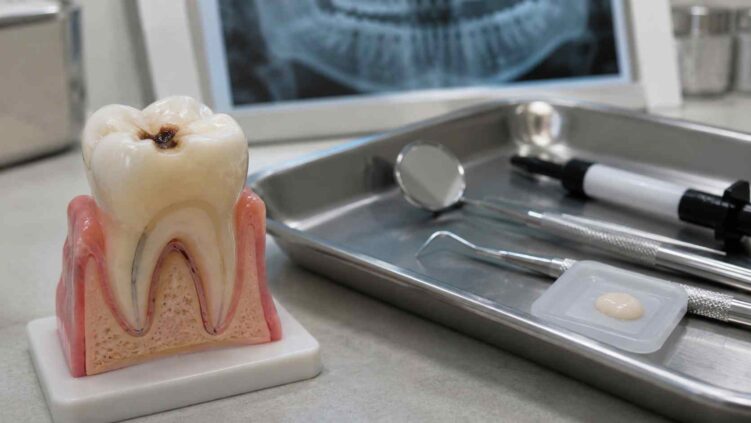
Tooth decay often begins without much warning. Bacteria in your mouth produce acids that gradually damage the tooth’s protective enamel.
As decay progresses into the softer layer underneath, you might notice sensitivity to sweets, cold drinks, or hot food. Sometimes there’s no pain at all.
At this stage, treatment is usually relatively straightforward.
A dentist removes the decayed portion and repairs the tooth with filling material. Depending on the cavity’s size and location, the procedure may take less than an hour.
According to published US dental cost estimates, a standard composite filling averages approximately $226, although actual charges depend on the dentist, location, and number of tooth surfaces involved.
An examination and X-rays may add to the bill.
For someone without dental insurance, paying $200 to $400 for an appointment and treatment can feel frustrating.
However, there’s an important financial distinction between an expense you can plan for and one that becomes unavoidable.
Planning for unexpected medical expenses is also an important part of financial contingency planning, which helps protect your budget when sudden costs arise.
A small filling is typically a manageable, one-time repair. If the decay reaches deeper tissues, the treatment becomes considerably more involved.
Not every untreated cavity progresses to a root canal, but waiting increases the risk that a simple repair will no longer be enough.
Stage 2: When the Pain Fades, the Expensive Trap Begins
Here’s where people often make a costly mistake.
Your tooth hurts for several days. Then, unexpectedly, the pain becomes less noticeable or disappears completely.
You cancel the appointment and assume your body has handled the problem.
Unfortunately, disappearing pain doesn’t always mean recovery.
Why a Tooth Can Stop Hurting Without Healing
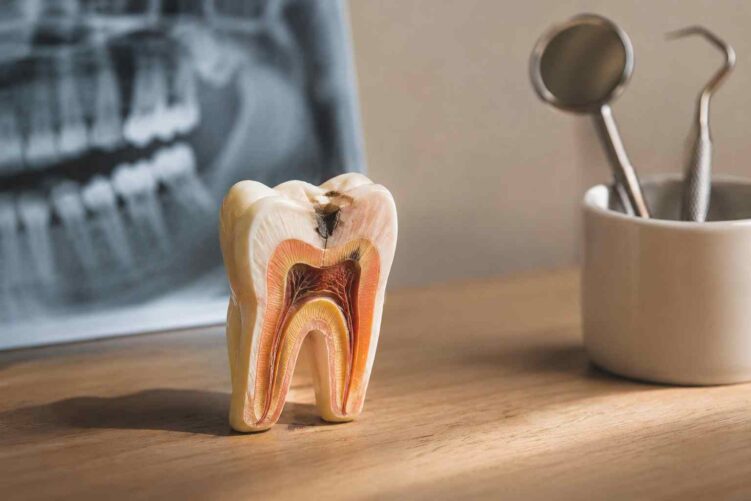
Inside every tooth is soft tissue containing nerves and blood vessels, called the pulp.
When decay reaches this tissue, inflammation or infection can cause intense discomfort. In severe cases, the pulp eventually dies, and the damaged nerve stops transmitting pain signals.
The tooth might feel better even though the underlying problem remains.
Many people continue waiting because they wonder can a toothache go away on its own, without realizing that fading pain can sometimes indicate serious nerve damage rather than healing.
Not every temporary toothache signals a dying nerve. Sensitivity can have several causes, some relatively minor.
But there’s no reliable way to determine the difference based on pain alone.
What Happens While You Wait?
If bacteria reach the tooth’s pulp and the infection remains untreated, it can spread through the root canals into the surrounding tissues.
An abscess may develop, sometimes producing swelling, pressure, or severe pain when biting.
At that point, a basic filling cannot remove the infection from inside the tooth.
The money you avoided spending on an early appointment may now be a fraction of the treatment cost.
Stage 3: Root Canals, Crowns, and Extractions
Once the pulp is irreversibly damaged or infected, a dentist may recommend root canal treatment to preserve the tooth.
During the procedure, infected or damaged tissue is removed from inside the tooth. The canals are cleaned, sealed, and the tooth is restored.
The treatment can save your natural tooth, but the financial difference compared with an early filling is substantial.
The Cost of Saving an Infected Tooth
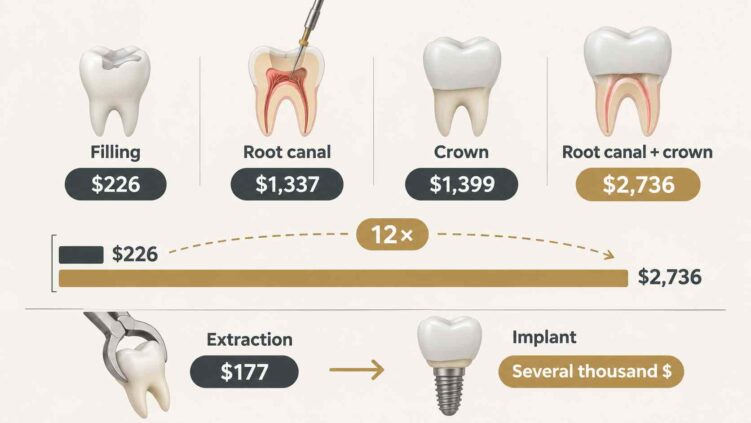
US dental pricing estimates put a root canal at approximately $984 for a front tooth and $1,337 for a molar.
Many back teeth also need crowns afterward to protect their remaining structure.
A porcelain crown averages around $1,399, bringing the combined treatment cost for a molar to approximately $2,736, before any additional charges.
Consider the difference:
| Treatment | Illustrative US cost |
|---|---|
| Composite filling | $226 |
| Molar root canal | $1,337 |
| Porcelain crown | $1,399 |
| Root canal + crown | $2,736 |
| Simple extraction | $177 |
Figures are approximate US averages based on published CareCredit dental cost data. They are not a treatment quote.
A $226 filling compared with a $2,736 root canal and crown represents roughly twelve times the expense.
Dental insurance may reduce some charges, but deductibles, annual benefit limits, and coverage restrictions can leave patients responsible for a significant portion.
If an unexpected dental bill ends up on a credit card, having a plan to pay off debt faster can help reduce the interest you pay over time.
When Extraction Becomes the Only Practical Option
Sometimes a badly damaged tooth cannot be saved.
Extraction may appear cheaper initially, especially when a straightforward removal costs approximately $177.
But replacing the missing tooth creates another financial decision.
A dental implant with its supporting components and crown can cost several thousand dollars. Depending on the case, bone grafting or other preparatory treatment may increase the total.
Not every extracted tooth needs an implant, and bridges or removable appliances may offer alternatives. Still, removing a tooth doesn’t necessarily mean the expenses are finished.
The Hidden Costs That Don’t Appear on the Dental Bill
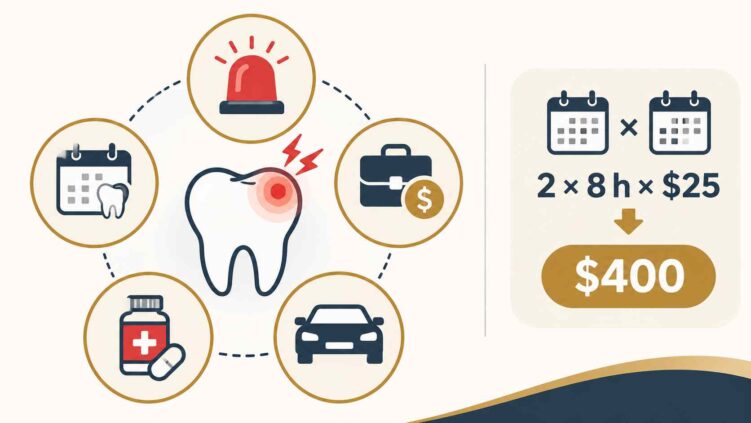
Treatment fees are only part of the financial picture.
A severe toothache can interfere with sleep, concentration, and your ability to work. Someone paid hourly may lose income when appointments or recovery require time off.
- Emergency appointments: After-hours treatment may involve additional fees.
- Missed work: Multiple visits can mean lost wages or used vacation days.
- Medication: Pain relievers and prescribed medicines add smaller, separate costs.
- Transportation: Specialist appointments may require additional travel.
- Follow-up treatment: Complications or additional restoration work can create further expenses.
Imagine losing two eight-hour shifts at $25 per hour. That’s another $400 in missed gross wages, before considering any treatment costs.
Medication might temporarily relieve discomfort, but it won’t repair a cavity or eliminate the source of a dental infection.
When to Stop Waiting and Book a Dental Exam
You don’t need to visit a dentist every time a cold drink makes your teeth feel sensitive. However, recurring or unexplained pain deserves attention.
- Book an examination if tooth pain persists, returns, or disrupts sleep.
- Get persistent sensitivity to hot or cold foods checked.
- Don’t ignore discomfort when chewing or biting.
- Arrange prompt dental care for gum swelling, a bad taste, or suspected infection.
- Seek emergency medical attention for facial swelling with difficulty breathing or swallowing.
- Ask for a written treatment estimate and check insurance coverage before non-emergency procedures.
If cost is the main obstacle, compare dental practices, ask about payment plans, or look into accredited dental school clinics that may provide lower-cost treatment.
The goal isn’t to spend money on unnecessary dental work. It’s to identify a problem while the affordable options are still available.
The same principle applies to regular home care, where catching small problems early can prevent much larger repair bills.
A toothache that costs $200 to address this month could become a $2,000-plus problem later. Booking an examination early won’t guarantee a filling is all you need, but it gives you a better chance of avoiding the most expensive outcome.